


Ozon- und UV-Technologien: Wie lässt sich die Wasseraufbereitung für Whirlpools im Freien verbessern?
2026-10-19 15:30Water treatment has long been one of the core technical challenges in the development of the outdoor whirlpool hot tub industry. Unlike standard cold-water pools, outdoor hot tubs typically maintain water temperatures between 36°C and 40°C. While this warmth is ideal for relaxation, it also creates an environment that fosters the proliferation of bacteria, microorganisms, and organic contaminants. When users enter the tub, substances such as sweat, sebum, dead skin cells, cosmetic residues, and environmental dust enter the circulating water system. Without an efficient water treatment solution, issues such as turbidity, unpleasant odors, foam buildup, and pipe contamination can easily arise.
For residential users, water quality directly impacts the user experience. For instance, if an outdoor whirlpool hot tub—intended for relaxation and wellness—consistently emits irritating odors, causes skin discomfort, or requires frequent cleaning and maintenance, user satisfaction will drop significantly. Water quality management is even more critical for hotels, resorts, and commercial spa facilities; given the higher frequency of use, inadequate maintenance not only harms the customer experience but can also drive up operating costs.
Traditionally, outdoor hot tubs have relied on chemical disinfection methods—such as chlorine or bromine—to control microorganisms. However, as the market evolves, the limitations of relying solely on chemical disinfection have become apparent. While effective at killing bacteria, chemical disinfectants require continuous dosing and can produce irritating odors and by-products when reacting with organic matter in the water. Inaccurate dosage control can also lead to water balance issues, including pH fluctuations, skin irritation, and corrosion of equipment components.
Consequently, manufacturers of modern, high-quality modern outdoor jacuzzi tubs are adopting more advanced water treatment technologies, with ozone and ultraviolet (UV) systems emerging as prominent solutions. Rather than simply replacing traditional disinfectants, these technologies enhance the purification capabilities of the water circulation system and reduce the contaminant load, allowing outdoor whirlpool hot tubs to maintain stable water quality with minimal chemical maintenance.
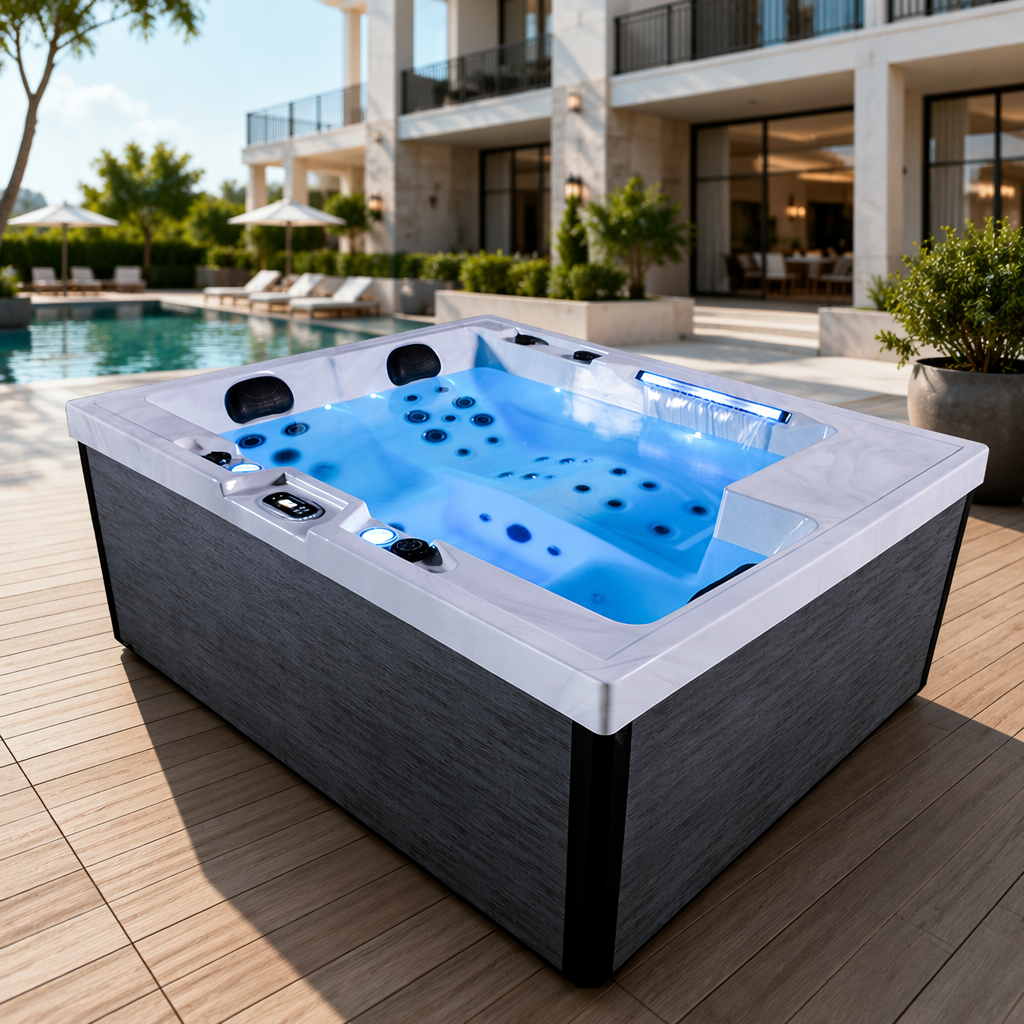
Why has water treatment become a critical issue for the outdoor hot tub industry?
The primary distinction between an outdoor whirlpool hot tub and a standard bathtub lies in its nature as a continuously circulating warm-water system. The unit typically houses a heating system, water pumps, filtration, massage jets, and complex piping; while these components create a relaxing spa experience, they also complicate water quality management.
Warm environments accelerate microbial proliferation. Research indicates that most bacteria multiply rapidly under favorable temperature and nutritional conditions, and the organic contaminants found in outdoor hot tubs provide the ideal substrate for such growth. Contaminant concentrations rise significantly, particularly when the tub is used by multiple people in succession.
For instance, in a residential modern outdoor jacuzzi tub with a capacity of 1,000 to 1,500 liters, consecutive use by four to six people over a short period can rapidly increase the organic load due to sweat and sebum released from the body. If the filtration, circulation, and disinfection systems cannot process this load effectively, several issues may arise:
First, water clarity diminishes.
Crystal-clear water is a hallmark of a high-quality outdoor hot tub, whereas the accumulation of organic matter causes the water to lose its transparency over time.
Second, unpleasant odors develop.
Healthy hot tub water should generally remain fresh-smelling; a noticeable, pungent odor often indicates the presence of byproducts formed by the reaction between contaminants and disinfectants.
Third, contamination accumulates within the hidden piping.
Outdoor hot tubs contain extensive internal plumbing and jet systems; without effective, long-term oxidation treatment, biofilms can form on the pipe walls. These biofilms not only degrade water quality but also serve as a persistent breeding ground for microorganisms.
Furthermore, an over-reliance on chemical agents complicates maintenance.
If users must frequently test water quality and adjust chemical dosages, the convenience of using the equipment is compromised.
Consequently, the outdoor whirlpool hot tub industry is shifting away from the traditional approach of simply adding more chemical disinfectants toward minimizing contamination through advanced technology. Driven by this trend, ozone and UV technologies are increasingly becoming standard features in high-end models.
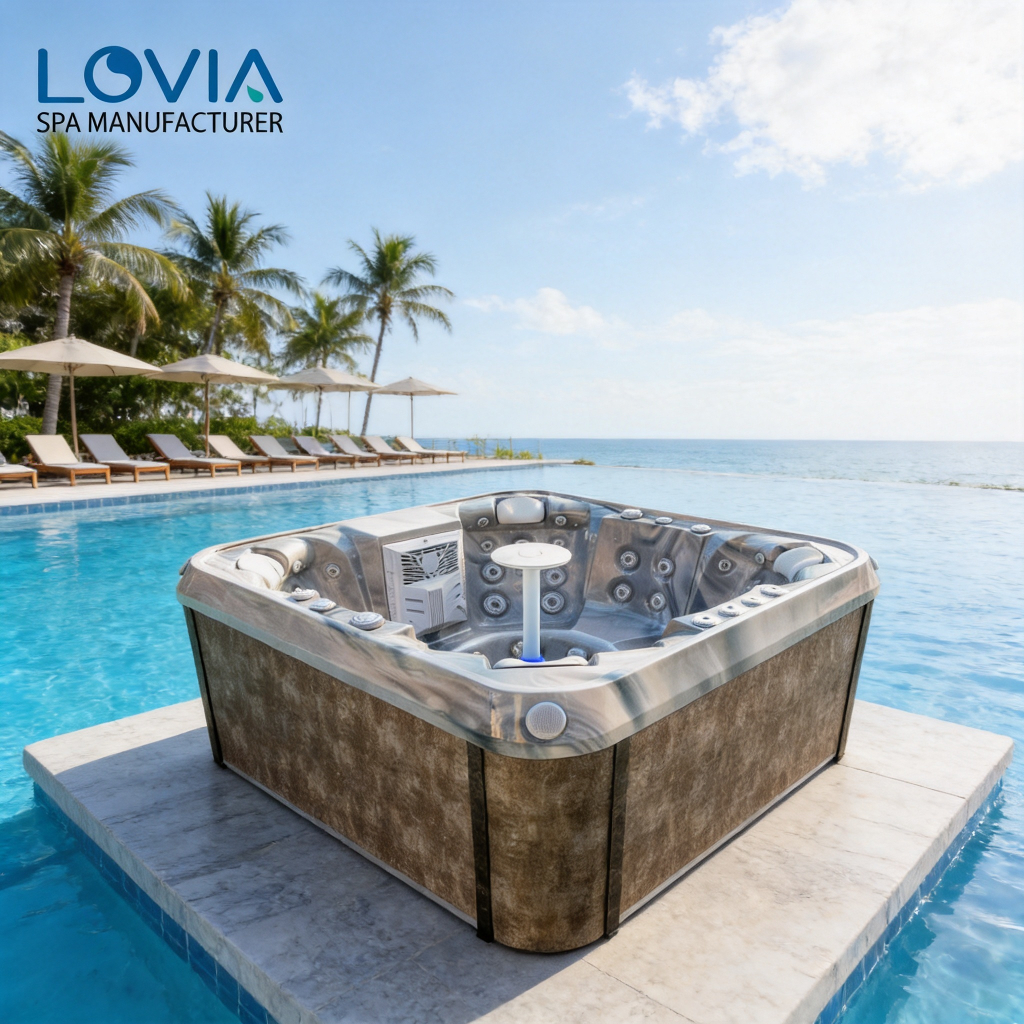
How Ozone Technology Works in Outdoor Hot Tub Water Treatment
Ozone is a powerful oxidizing agent composed of three oxygen atoms, possessing high redox potential. In outdoor whirlpool hot tub water treatment systems, ozone primarily decomposes organic contaminants in the water through oxidation and helps reduce microbial populations.
Simply put, ozone acts as a highly efficient water purification tool. Oxygen from the air is converted into ozone gas by an ozone generator and then introduced into the circulating water system via a specialized injection device. As the water circulates, ozone comes into contact with contaminants and breaks down the structure of organic matter through oxidation reactions.
This treatment method is crucial for outdoor whirlpool hot tubs because many sources of contamination in warm water environments are not merely bacteria, but significant amounts of organic matter produced by the human body. Examples include:
Organic components in sweat;
Skin oils;
Cosmetic residues;
Sunscreen products;
Environmental dust.
If allowed to accumulate over time, these substances increase the load on the filtration system and reduce disinfection efficiency. Ozone helps break down these organic contaminants, resulting in more stable water quality.
Compared to traditional chemical disinfection methods, ozone offers several distinct advantages. First, unlike chlorine, it does not generate large amounts of chlorine-containing byproducts, thereby improving the water's odor. Second, ozone oxidizes rapidly, helping to reduce the contaminant load in the circulating water. Third, ozone complements traditional disinfectants, enhancing overall water treatment efficiency.
However, it is important to have a correct understanding of the role of ozone technology. Ozone does not completely replace chlorine or bromine; rather, it serves as a supplementary purification method in modern outdoor jacuzzi tub systems. Effective water treatment solutions typically employ a combination of dddhhhozone + filtration + a small amount of chemical disinfection,dddhhh maintaining long-term water quality stability through multi-layered protection.
How Does UV Technology Improve Outdoor Hot Tub Water Quality?
In addition to ozone technology, UV (ultraviolet) water treatment is another technology that has seen increasingly widespread use in recent years.
UV systems utilize ultraviolet light at specific wavelengths to disrupt the cellular structure of microorganisms, rendering them unable to reproduce. In the field of water treatment, UV-C ultraviolet light is commonly employed, with the 254nm wavelength being widely used in disinfection equipment.
Unlike traditional chemical disinfection, UV technology is a physical treatment method; it adds no chemicals to the water and therefore does not alter the water's chemical composition.
In outdoor whirlpool hot tubs, UV systems are typically installed within the water circulation loop. As water passes through the UV treatment chamber, it is exposed to ultraviolet radiation, which reduces the activity of microorganisms within the flow.
UV technology offers several key advantages:
First, it acts rapidly; treatment is completed quickly as the water flows through the UV zone.
Second, it leaves no chemical residue—a crucial factor for users seeking a natural spa experience.
Third, maintenance is relatively simple; under normal conditions, the UV lamp simply needs to be replaced periodically based on usage time.
However, UV technology does have limitations. Since ultraviolet light only affects the water passing through the area illuminated by the lamp, it cannot continuously oxidize organic contaminants in the water in the way ozone does. Consequently, in high-end modern outdoor jacuzzi tub systems, UV is rarely used in isolation; instead, it is combined with ozone technology.
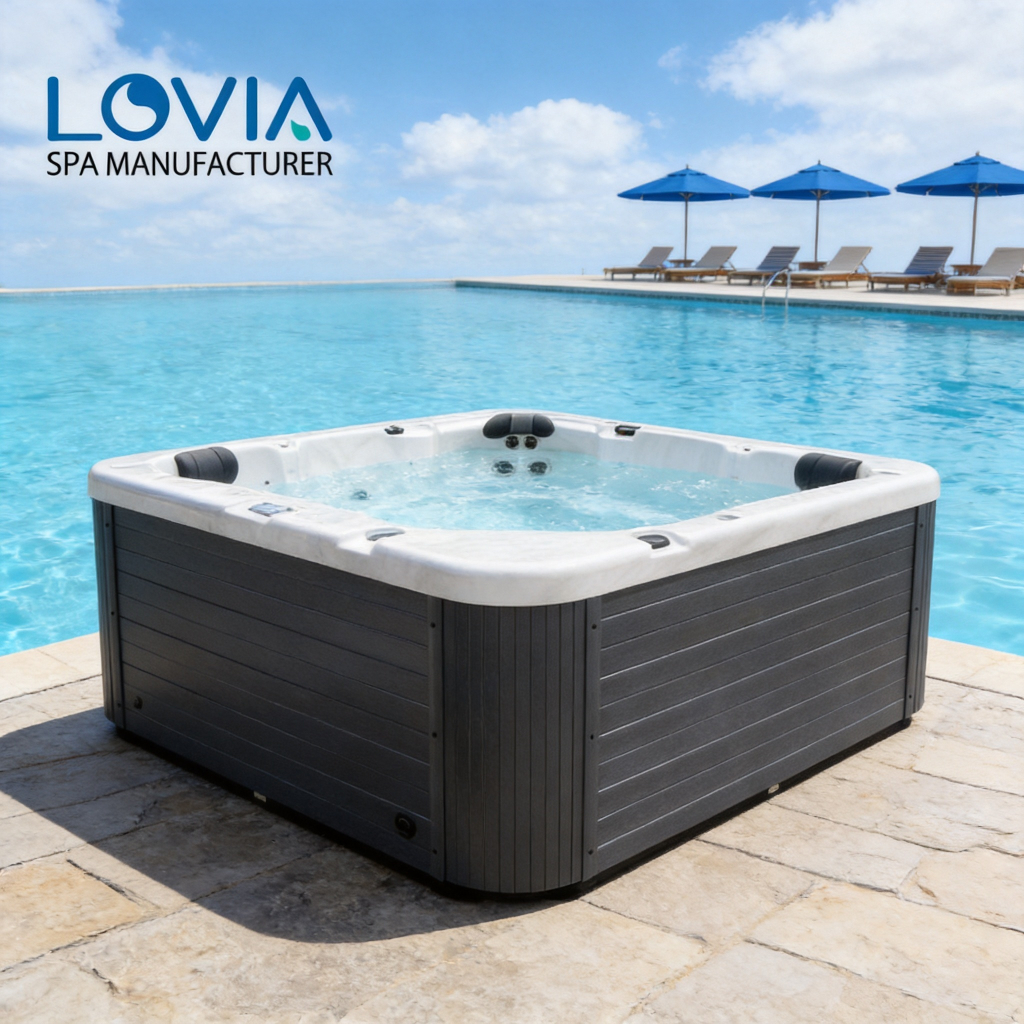
Why has the combination of ozone and UV technology become the trend for water treatment in high-end outdoor hot tubs?
In practice, relying on a single water treatment technology often fails to meet the requirements for the long-term, stable operation of modern outdoor jacuzzi tubs. While both ozone and UV technologies offer distinct advantages, they address different issues. Ozone excels at handling organic contaminants, using strong oxidation to reduce the pollution load in the water, whereas UV technology focuses on using ultraviolet energy to reduce microbial activity in the treated zone. Combining the two creates a more comprehensive water treatment system.
For modern outdoor jacuzzi tubs, the ideal water treatment process typically involves a multi-layered protection approach.
First, the filtration system removes hair, dust, skin flakes, and other particulate contaminants from the water. Next, the circulating water enters the ozone treatment zone, where ozone oxidizes organic matter, thereby reducing sources of contamination. The water then passes through a UV module for further microbial control. Finally, proper pH adjustment and a small amount of disinfectant maintain long-term water stability.
The advantage of this combined approach is that it mitigates the limitations associated with relying on a single technology. For instance, relying solely on chlorine disinfection requires high chemical concentrations to maintain water quality, which can lead to irritating odors and increased maintenance demands. UV technology alone can control some microorganisms but has limited capacity to handle organic contaminants like body oils and sweat. Ozone alone may fail to effectively treat the entire water circulation loop.
Consequently, the combination of ozone and UV technologies has become a key feature of high-quality outdoor whirlpool hot tubs. Particularly in European and North American markets, high-end residential projects, and commercial spa sectors, there is growing consumer demand for water treatment methods that are eco-friendly, comfortable, and entail a lower chemical load. This trend is driving the evolution of water treatment systems from simple disinfection to comprehensive purification.
H2: Key Technical Parameters Affecting Water Treatment Performance in Outdoor Hot Tubs
While ozone and UV technologies improve water quality, the ultimate outcome depends on the overall system design. When selecting a modern outdoor jacuzzi tub, consumers and buyers should look beyond the mere presence of ozone or UV systems and consider the overall performance of the water treatment setup.
First is the water circulation capacity.
Water treatment effectiveness is closely linked to the rate of water circulation. If the circulation rate is insufficient, even advanced purification equipment cannot treat the entire volume of water in the tub in a timely manner. Generally, the larger the capacity of the outdoor whirlpool hot tub, the more demanding the requirements for the circulation system.
For example, a small residential outdoor whirlpool hot tub might have a capacity of 800–1,200 liters, whereas a large commercial model could exceed 2,000 liters. Equipment of different capacities requires circulation pumps with matching flow rates; otherwise, issues such as uneven water quality in different areas of the tub may arise.
Second is the ozone output capacity.
For ozone generators, higher power is not necessarily better; instead, the system must be properly matched to the equipment's capacity, circulation rate, and operating environment. Insufficient ozone output fails to effectively reduce the pollution load, while excessive output can compromise the stability of the equipment's operation.
Professional manufacturers typically tailor the system to the specific hot tub capacity, water circulation system, and target market requirements, rather than simply installing a standard, fixed-specification ozone unit.
Third, consider the parameters of the UV system.
UV effectiveness is influenced by several factors, including UV intensity, lamp lifespan, water flow rate, and the design of the UV chamber.
Typically, the UV output of a lamp gradually declines over time with use; therefore, periodic replacement is required in accordance with the manufacturer's recommendations. Many commercial systems manage maintenance based on operating hours, with a common service interval of approximately 8,000 to 10,000 hours.
Fourth, consider the filtration system.
Water treatment is not achieved solely through ozone and UV; the filter serves as the foundation of the entire system. If filtration capacity is inadequate, a large volume of particulate contaminants enters the circulation system, placing increased strain on the ozone and UV modules.
High-quality outdoor whirlpool hot tubs typically utilize filter cartridges with large surface areas and feature well-designed plumbing layouts that integrate filtration, oxidation, and disinfection into a seamless cycle.
FAQ: Frequently Asked Questions about Ozone and UV Water Treatment for Outdoor Hot Tubs
1. After using an ozone system in an outdoor hot bath, is it necessary to add chlorine or bromine?
Generally, yes. Ozone is primarily used to reduce organic contaminants and assist in water purification, whereas chlorine or bromine provide continuous disinfection protection. Modern, high-end outdoor hot tubs typically employ a combination of ozone, UV, and a small amount of chemical disinfectant to achieve more stable water quality management.
2. Can a UV system completely replace chemical disinfection for outdoor whirlpool hot tubs?
No, it cannot fully replace it. UV primarily treats the water flowing through the area exposed to the UV lamp and cannot maintain disinfection protection for the entire body of water over the long term. Consequently, UV is usually employed as a supplementary water treatment technology alongside filtration and chemical balance management.
3. Does ozone technology compromise the safety of using an outdoor hot tub?
Ozone systems that are properly designed and installed do not compromise user safety. Ozone primarily functions within the circulation piping and does not come into direct contact with the human body at high concentrations. Professional manufacturers ensure safe equipment operation by carefully controlling ozone levels.
4. Do outdoor hot tubs equipped with ozone and UV systems have lower maintenance costs?
Generally, yes. Although the initial equipment cost may be higher, the resulting water stability allows for less frequent use of certain chemicals and reduces the need for maintenance caused by water quality issues.